
Торговое название:
- Бристафлам
- Bristaflam
Состав:
Каждая таблетка содержит:
Ацеклофенак – 100 мг
Вспомогательные компоненты:
Целлюлоза микрокристаллическая, кроскармеллоза натрия, повидон К30, натрия стеарила фумарат.
Свойства:
НПВС, производное фенилуксусной кислоты. Оказывает противовоспалительное, анальгезирующее и жаропонижающее действие, что обусловлено ингибированием ЦОГ-1 и ЦОГ-2 и угнетением синтеза простагландинов.
При ревматических заболеваниях противовоспалительное и анальгезирующее действие ацеклофенака способствует значительному уменьшению выраженности боли, утренней скованности, припухлости суставов, что улучшает двигательную активность пациента.
Показания:
Cимптоматическое лечение заболеваний опорно-двигательного аппарата, в т.ч.: ревматоидный артрит; остеоартроз; анкилозирующий спондилит.
Для купирования воспаления и болевого синдрома: люмбаго; плечелопаточный периартрит; ревматическое поражение мягких тканей; зубная боль.
Способ применения и дозы:
- Оптимальный режим дозирования определяет врач. Следует строго соблюдать соответствие используемой лекарственной формы конкретного препарата показаниям к применению и режиму дозирования.
- Ацеклофенак предназначен для симптоматической терапии, уменьшения боли и воспаления на момент использования, на регрессирование заболевания не влияет.
- Для снижения риска развития нежелательных явлений ацеклофенак следует использовать в минимальной эффективной дозе минимально возможным коротким курсом.
- Для приема внутрь – по 100 мг 2 раза/сут утром и вечером.
- Продолжительность терапии без назначения врача составляет не более 7 дней.
Противопоказания:
- Повышенная чувствительность к ацеклофенаку и другим НПВС; “аспириновая триада” (сочетание бронхиальной астмы, рецидивирующего полипоза носа и околоносовых пазух и непереносимости ацетилсалициловой кислоты и препаратов пиразолонового ряда);
- эрозивно-язвенные поражения ЖКТ (в фазе обострения);
- желудочно-кишечное кровотечение или подозрение на него;
- воспалительные заболевания кишечника;
- тяжелая почечная недостаточность (КК <30 мл/мин);
- прогрессирующие заболевания почек; активное заболевание печени;
- заболевания щитовидной железы;
- подтвержденная гиперкалиемия;
- острый инфаркт миокарда;
- период после проведения аортокоронарного шунтирования;
- артериальная гипотензия;
- артериальная гипертензия;
- острые нарушения мозгового кровообращения (ишемический, геморрагический инсульт);
- нарушения кроветворения и заболевания крови (лейкопения, в т.ч. в анамнезе, тромбоцитопения, гемофилия);
- выраженная миопатия, тяжелая миастения;
- беременность;
- период лактации (грудного вскармливания);
- детский и подростковый возраст до 18 лет.
Меры предосторожности:
С осторожностью применять при заболеваниях печени, почек и ЖКТ в анамнезе, бронхиальной астме, артериальной гипертензии, ИБС, указаниях в анамнезе на развитие язвенного поражения ЖКТ, при наличии инфекции Helicobacter pylori, при цереброваскулярных заболеваниях, дислипидемии/гиперлипидемии, сахарном диабете, заболеваниях периферических артерий, у курящих, у пациентов пожилого возраста, при длительном приеме НПВС, при частом употреблении алкоголя, при тяжелых соматических заболеваниях.
Побочные эффекты:
- Со стороны нервной системы: часто – головокружение; очень редко – парестезия, тремор, сонливость, головная боль, дисгевзия (извращение вкуса).
- Со стороны пищеварительной системы: часто – диспепсия, боль в животе, тошнота, диарея; нечасто – метеоризм, гастрит, запор, рвота, язвенный стоматит; редко – мелена, образование язв желудка и кишечника, геморрагическая диарея, желудочно-кишечное кровотечение; очень редко – стоматит, рвота кровью, прободение кишечника, обострение болезни Крона и язвенного колита, панкреатит.
- Со стороны печени и желчевыводящих путей: часто – повышение активности ферментов печени; очень редко – заболевание печени (включая гепатит), увеличение активности ЩФ.
Способ хранения:
При температуре не выше 30°С в сухом месте.
Упаковка:
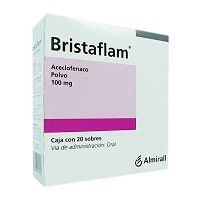
Картонная коробка вмещает 1 или 2 блистера по 10 таблеток, бумажную инструкцию.
Торговое название:
Бристафлам
Bristaflam
Состав:
Каждая таблетка содержит:
Ацеклофенак 100 мг
Вспомогательные компоненты:
микрокристаллическая целлюлоза, кроскармеллоза натрия, повидон К30, стеарилфумарат натрия.
Свойства:
НПВП, производное фенилуксусной кислоты. Он обладает противовоспалительным, обезболивающим и жаропонижающим действием, что обусловлено ингибированием ЦОГ-1 и ЦОГ-2 и ингибированием синтеза простагландинов.
При ревматических заболеваниях противовоспалительное и обезболивающее действие ацеклофенака способствует значительному уменьшению выраженности болей, утренней скованности, припухлости суставов, что улучшает двигательную активность пациента.
Показания:
Cимптоматическое лечение заболеваний опорно-двигательного аппарата, в т. ч. : ревматоидный артрит; остеоартроз; анкилозирующий спондилит.
Для купирования воспаления и болевого синдрома: люмбаго; плечелопаточный периартрит; ревматическое поражение мягких тканей; зубная боль.
Способ применения и дозы:
Оптимальный режим дозирования определяет врач. Следует строго соблюдать соответствие используемой лекарственной формы конкретного препарата показаниям к применению и режиму дозирования.
Ацеклофенак предназначен для симптоматической терапии, уменьшения боли и воспаления на момент использования, на регрессирование заболевания не влияет.
Для снижения риска развития нежелательных явлений ацеклофенак следует использовать в минимальной эффективной дозе минимально возможным коротким курсом.
Для приема внутрь — по 100 мг 2 раза/сут утром и вечером.
Продолжительность терапии без назначения врача составляет не более 7 дней.
Противопоказания:
Повышенная чувствительность к ацеклофенаку и другим НПВС; «аспириновая триада» (сочетание бронхиальной астмы, рецидивирующего полипоза носа и околоносовых пазух и непереносимости ацетилсалициловой кислоты и препаратов пиразолонового ряда); эрозивно-язвенные поражения ЖКТ (в фазе обострения); желудочно-кишечное кровотечение или подозрение на него; воспалительные заболевания кишечника; тяжелая почечная недостаточность (КК <30 мл/мин); прогрессирующие заболевания почек; активное заболевание печени; заболевания щитовидной железы; подтвержденная гиперкалиемия; острый инфаркт миокарда; период после проведения аортокоронарного шунтирования; артериальная гипотензия; артериальная гипертензия; острые нарушения мозгового кровообращения (ишемический, геморрагический инсульт); нарушения кроветворения и заболевания крови (лейкопения, в т. ч. в анамнезе, тромбоцитопения, гемофилия); выраженная миопатия, тяжелая миастения; беременность; период лактации (грудного вскармливания); детский и подростковый возраст до 18 лет.
Меры предосторожности:
С осторожностью применять при заболеваниях печени, почек и ЖКТ в анамнезе, бронхиальной астме, артериальной гипертензии, ИБС, указаниях в анамнезе на развитие язвенного поражения ЖКТ, при наличии инфекции Helicobacter pylori, при цереброваскулярных заболеваниях, дислипидемии/гиперлипидемии, сахарном диабете, заболеваниях периферических артерий, у курящих, у пациентов пожилого возраста, при длительном приеме НПВС, при частом употреблении алкоголя, при тяжелых соматических заболеваниях.
Побочные эффекты:
Со стороны нервной системы: часто — головокружение; очень редко — парестезия, тремор, сонливость, головная боль, дисгевзия (извращение вкуса).
Со стороны пищеварительной системы: часто — диспепсия, боли в животе, тошнота, диарея; нечасто — метеоризм, гастрит, запор, рвота, язвенный стоматит; редко — мелена, образование язв желудка и кишечника, геморрагическая диарея, желудочно-кишечные кровотечения; очень редко — стоматит, рвота кровью, перфорация кишечника, обострение болезни Крона и язвенного колита, панкреатит.
Со стороны печени и желчевыводящих путей: часто — повышение активности печеночных ферментов; очень редко — заболевания печени (в том числе гепатит), повышение активности щелочной фосфатазы.
Способ хранения:
Хранить при температуре не выше 30 градусов. В сухом месте.
Упаковка:
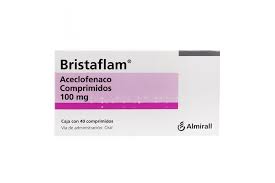
Картонная коробка содержит 2 блистера по 10 таблеток, бумажную инструкцию.
Top 20 medicines with the same components:
Top 20 medicines with the same treatments:

The information provided in of Bristaflam
is based on data of another medicine with exactly the same composition as the Bristaflam.
. Be careful and be sure to specify the information on the section in the instructions to the drug Bristaflam directly from the package or from the pharmacist at the pharmacy.
more…
Bristaflam
Qualitative and quantitative composition
The information provided in Qualitative and quantitative composition of Bristaflam
is based on data of another medicine with exactly the same composition as the Bristaflam.
. Be careful and be sure to specify the information on the section Qualitative and quantitative composition in the instructions to the drug Bristaflam directly from the package or from the pharmacist at the pharmacy.
more…
Aceclofenac
Therapeutic indications
The information provided in Therapeutic indications of Bristaflam
is based on data of another medicine with exactly the same composition as the Bristaflam.
. Be careful and be sure to specify the information on the section Therapeutic indications in the instructions to the drug Bristaflam directly from the package or from the pharmacist at the pharmacy.
more…
Bristaflam film-coated tablets are indicated for the relief of pain and inflammation in osteoarthritis, rheumatoid arthritis and ankylosing spondylitis.
Dosage (Posology) and method of administration
The information provided in Dosage (Posology) and method of administration of Bristaflam
is based on data of another medicine with exactly the same composition as the Bristaflam.
. Be careful and be sure to specify the information on the section Dosage (Posology) and method of administration in the instructions to the drug Bristaflam directly from the package or from the pharmacist at the pharmacy.
more…
Bristaflam film-coated tablets are supplied for oral administration and should be swallowed whole with a sufficient quantity of liquid.
To be taken preferably with or after food. When Bristaflam was administered to fasting and fed healthy volunteers only the rate and not the extent of Bristaflam absorption was affected.
Undesirable effects may be minimized by using the lowest effective dose for the shortest duration necessary to control symptoms.
Adults
The recommended dose is 200 mg daily, taken as two separate 100 mg doses, one tablet in the morning and one in the evening.
Paediatric population
There are no clinical data on the use of Bristaflam in children and therefore it is not recommended for use in children under 18 years of age.
Elderly
The elderly, who are more likely to be suffering from impaired renal, cardiovascular or hepatic function and receiving concomitant medication, are at increased risk of serious consequences of adverse reactions. If an NSAID is considered necessary, the lowest effective dose should be used and for the shortest possible duration. The patient should be monitored regularly for GI bleeding during NSAID therapy.
The pharmacokinetics of Bristaflam are not altered in elderly patients, therefore it is not considered necessary to modify the dose or dose frequency.
Renal insufficiency
There is no evidence that the dosage of Bristaflam needs to be modified in patients with mild renal impairment, but as with other NSAIDs caution should be exercised.
Hepatic insufficiency
There is some evidence that the dose of Bristaflam should be reduced in patients with hepatic impairment and it is suggested that an initial daily dose of 100 mg be used.
Method of administration
Swallow the tablet whole with a glass of water. Do not crush or chew the tablets. Never change the dose of your medicine without talking to your doctor first. Continue to take your tablets for as long as your doctor recommends.
Contraindications
The information provided in Contraindications of Bristaflam
is based on data of another medicine with exactly the same composition as the Bristaflam.
. Be careful and be sure to specify the information on the section Contraindications in the instructions to the drug Bristaflam directly from the package or from the pharmacist at the pharmacy.
more…
Hypersensitivity to Bristaflam or to any of the excipients.
Active, or history of recurrent peptic ulcer/haemorrhage (two or more distinct episodes of proven ulceration or bleeding).
History of active bleedings or bleeding disorders
NSAIDS are contraindicated in patients who have previously shown hypersensitivity reactions (e.g. Asthma, rhinitis, angioedema or urticaria) in response to ibuprofen, aspirin, or other non-steroidal anti-inflammatory drugs.
Patients with established congestive heart failure (NYHA class II-IV), ischaemic heart disease, peripheral arterial disease and/or cerebrovascular disease.
Severe heart failure, hepatic failure and renal failure.
History of gastrointestinal bleeding or perforation, related to previous NSAIDS therapy.
Bristaflam should not be prescribed during pregnancy, especially during the last trimester of pregnancy, unless there are compelling reasons for doing so. The lowest effective dosage should be used.
Special warnings and precautions for use
The information provided in Special warnings and precautions for use of Bristaflam
is based on data of another medicine with exactly the same composition as the Bristaflam.
. Be careful and be sure to specify the information on the section Special warnings and precautions for use in the instructions to the drug Bristaflam directly from the package or from the pharmacist at the pharmacy.
more…
The use of Bristaflam with concomitant NSAIDs including cyclooxygenase- 2 selective inhibitors should be avoided.
Elderly:
The elderly have an increased frequency of adverse reactions to NSAIDs especially gastrointestinal bleeding and perforation which may be fatal.
Respiratory disorders:
Caution is required if administered to patients suffering from, or with a previous history of, bronchial asthma since NSAIDs have been reported to precipitate bronchospasm in such patients.
Cardiovascular, Renal and Hepatic Impairment:
The administration of an NSAID may cause a dose dependent reduction in prostaglandin formation and precipitate renal failure.).
Renal:
The administration of an NSAID may cause a dose dependent reduction in prostaglandin formation and precipitate renal failure. The importance of prostaglandins in maintaining renal blood flow should be taken into account in patients with impaired cardiac or renal function, liver dysfunction, those being treated with diuretics or recovering from major surgery. Effects on renal function are usually reversible on withdrawal of Bristaflam Tablets.
Patients with mild to moderate renal impairment should be kept under surveillance, since the use of NSAIDs may result in deterioration of renal function. The lowest effective dose should be used and renal function monitored regularly. Effects on renal function are usually reversible on withdrawal of Bristaflam.
Hepatic:
If abnormal liver function tests persist or worsen, clinical signs or symptoms consistent with liver disease develop or if other manifestations occur (eosinophilia, rash), Bristaflam Tablets should be discontinued. Close medical surveillance is necessary in patients suffering from mild to moderate impairment of hepatic function. Hepatitis may occur without prodromal symptoms.
Use of NSAIDs in patients with hepatic porphyria may trigger an attack.
Cardiovascular and cerebrovascular effects:
Appropriate monitoring and advice are required for patients with a history of hypertension and/or mild to moderate congestive heart failure as fluid retention and oedema have been reported in association with NSAID therapy. As the cardiovascular risks of Bristaflam may increase with dose and duration of exposure, the shortest duration possible and the lowest effective daily dose should be used. The patient’s need for symptomatic relief and response to therapy should be re- evaluated periodically.
Bristaflam should also be administered with caution and under close medical surveillance to patients with congestive heart failure, significant risk factors for cardiovascular events and history of cerebrovascular bleeding.
Clinical trial and epidemiological data suggest that use of some NSAIDs (particularly at high doses and in long term treatment) may be associated with a small increased risk of arterial thrombotic events (for example myocardial infarction or stroke). There are insufficient data to exclude such a risk for Bristaflam.
Patients with uncontrolled hypertension, congestive heart failure, established ischaemic heart disease, peripheral arterial disease, and/or cerebrovascular disease should only be treated with Bristaflam after careful consideration. Similar consideration should be made before initiating longer-term treatment of patients with risk factors for cardiovascular disease (e.g. hypertension, hyperlipidaemia, diabetes mellitus, smoking).
Gastrointestinal bleeding, ulceration and perforation:
GI bleeding, ulceration or perforation, which can be fatal, has been reported with all NSAIDs at any time during treatment, with or without warning symptoms or a previous history of serious GI events.
Close medical surveillance is imperative in patients with:
— symptoms indicative of gastro-intestinal disorders involving either the upper or lower gastrointestinal tract
— with a history suggestive of gastro-intestinal ulceration, bleeding or perforation
— with ulcerative colitis or with Crohn’s disease
— bleeding diathesis or haematological abnormalities.
The risk of GI bleeding, ulceration or perforation is higher with increasing NSAID doses, in patients with a history of ulcer, particularly if complicated with haemorrhage or perforation , and in the elderly.).
Patients with a history of GI toxicity, particularly when elderly, should report any unusual abdominal symptoms (especially GI bleeding) particularly in the initial stages of treatment.
Caution should be advised in patients receiving concomitant medications which could increase the risk of ulceration or bleeding, such as oral corticosteroids, anticoagulants such as warfarin, selective serotonin-reuptake inhibitors or antiplatelet agents such as aspirin.
When GI bleeding or ulceration occurs in patients receiving Bristaflam, the treatment should be withdrawn.
NSAIDs should be given with care to patients with a history of gastrointestinal disease (ulcerative colitis, Crohn’s disease) as these conditions may be exacerbated.
SLE and mixed connective tissue disease:
In patients with systemic lupus erythematosus (SLE) and mixed connective tissue disorders there may be an increased risk of aseptic meningitis.
Dermatological:
Impaired female fertility:
The use of Bristaflam Tablets may impair female fertility and is not recommended in women attempting to conceive. In women who have difficulties conceiving or who are undergoing investigation of infertility, withdrawal of Bristaflam Tablets should be considered.
Hypersensitivity/Dermatological reactions:
As with other NSAIDs, allergic reactions, including anaphylactic/anaphylactoid reactions, can also occur without earlier exposure to the drug. Serious skin reactions, some of them fatal, including exfoliative dermatitis, Stevens-Jonson syndrome, and toxic epidermal necrolysis, have been reporting very rarely in association with the use of NSAIDs. Patients appear to be at highest risk of these reactions early in the course of therapy, the onset of the reaction occurring in the majority of cases within the first month of treatment. Bristaflam should be discontinued at the first appearance of skin rash, mucosal lesions, or any other sign of hypersensitivity.
Exceptionally, varicella can trigger serious cutaneous and soft tissues infections complications. To date, the contributing role of NSAIDs in the worsening of these infections cannot be ruled out. Thus, it is advisable to avoid use of Bristaflam in case of varicella.
Haematological:
Bristaflam Tablets may reversibly inhibit platelet aggregation (see anticoagulants under ‘Interactions’).
Long-term treatment:
All patients who are receiving NSAIDs should be monitored as a precautionary measure e.g. renal failure, hepatic function (elevation of liver enzymes may occur) and blood counts.
Effects on ability to drive and use machines
The information provided in Effects on ability to drive and use machines of Bristaflam
is based on data of another medicine with exactly the same composition as the Bristaflam.
. Be careful and be sure to specify the information on the section Effects on ability to drive and use machines in the instructions to the drug Bristaflam directly from the package or from the pharmacist at the pharmacy.
more…
Undesirable effects such as dizziness, vertigo, drowsiness, fatigue and visual disturbances are possible after taking NSAIDs. If affected, patients should not drive or operate machinery.
Undesirable effects
The information provided in Undesirable effects of Bristaflam
is based on data of another medicine with exactly the same composition as the Bristaflam.
. Be careful and be sure to specify the information on the section Undesirable effects in the instructions to the drug Bristaflam directly from the package or from the pharmacist at the pharmacy.
more…
Exceptionally, occurrence of serious cutaneous and soft tissues infections complications during varicella has been reported in association with NSAID treatment.
Bristaflam is both structurally related and metabolised to diclofenac for which a greater amount of clinical and epidemiological data consistently point towards an increased risk of general arterial thrombotic events (myocardial infarction or stroke, particularly at high doses and in long treatment).4 for contraindication and Special warnings and special precautions for use).
Gastrointestinal:
The most commonly-observed adverse events are gastrointestinal in nature. Peptic ulcers, perforation or GI bleeding, sometimes fatal, particularly in the elderly, may occur. Nausea, vomiting, diarrhoea, flatulence, constipation, dyspepsia, abdominal pain, melaena, haematemesis, ulcerative stomatitis, exacerbation of colitis and Crohn’s disease have been reported following administration. Less frequently, gastritis has been observed. Pancreatitis has been reported very rarely.
Hypersensitivity:
Hypersensitivity reactions have been reported following treatment with NSAIDs. These may consist of (a) non-specific allergic reactions and anaphylaxis (b) respiratory tract reactivity comprising asthma, aggravated asthma, bronchospasm or dyspnoea, or (c) assorted skin disorders, including rashes of various types, pruritus, urticaria, purpura, angiodema and, more rarely exfoliative and bullous dermatoses (including epidermal necrolysis and erythema multiforme).
Cardiovascular:
Oedema, hypertension and cardiac failure have been reported in association with NSAID treatment.
Clinical trial and epidemiological data suggest that use of some NSAIDs (particularly at high doses and in long term treatment) may be associated with an increased risk of arterial thrombotic events (for example myocardial infarction or stroke).
Other adverse reactions reported less commonly include:
Renal:
Nephrotoxicity in various forms, including interstitial nephritis, nephritic syndrome and renal failure.
Hepatic:
abnormal liver function, hepatitis and jaundice.
Neurological and special senses:
Visual disturbances, optic neuritis, headaches, paraesthesia, reports of aseptic meningitis (especially in patients with existing auto-immune disorders, such as systemic lupus erythematosus, mixed connective tissue disease), with symptoms such as stiff neck, headache, nausea, vomiting, fever or disorientation , depression, confusion, hallucinations, tinnitus, vertigo, dizziness, malaise, fatigue and drowsiness.
Haematological:
Thrombocytopenia, neutropenia, agranulocytosis, aplastic anaemia and haemolytic anaemia.
Dermatological:
Bullous reactions including Stevens Johnson Syndrome and Toxic Epidermal Necrolysis (very rare). Photosensitivity.
Within the system organ classes, undesirable effects are listed under headings of frequency, using the following categories: very common (>1/10); common (>1/100 to <1/10); uncommon (>1/1,000 to <1/100); rare (>1/10,000 to <1/1,000); very rare (<1/10,000), not known (cannot be estimated from the available data). Within each frequency grouping, undesirable effects are presented in order of decreasing seriousness.
|
System organ class |
Common (>1/100 to <1/10) |
Uncommon (>1/1,000 to <1/100) |
Rare (>1/10,000 to <1/1,000) |
Very rare/ isolated reports (<1/10,000) |
|
Blood and lymphatic system disorders |
Anaemia |
Bone Marrow depression, Granulocytopenia Thrombocytopenia Neutropenia Haemolytic anaemia |
||
|
Immune system disorders |
Anaphylactic reaction (including shock) Hypersensitivity |
|||
|
Metabolism and nutrition disorders |
Hyperkalemia |
|||
|
Psychiatric disorders |
Depression Abnormal dreams Insomnia |
|||
|
Nervous system disorders |
Dizziness |
Paraesthesia Tremor Somnolence Headache Dysgeusia (abnormal taste) |
||
|
Eye disorders |
Visual disturbance |
|||
|
Ear and labyrinth disorders |
Vertigo Tinnitus |
|||
|
Cardiac disorders |
Cardiac failure |
Palpitations |
||
|
Vascular disorders |
Hypertension |
Flushing Hot flush vasculitis |
||
|
Respiratory, thoracic and mediastinal disorders |
Dyspnoea |
Bronchospasm Stridor |
||
|
Gastrointestinal disorders |
Dyspepsia Abdominal pain Nausea Diarrhoea |
Flatulence Gastritis Constipation Vomiting Mouth ulceration |
Melaena Gastrointestinal haemorrhage Gastrointestinal ulceration |
Stomatitis Intestinal perforation Exacerbation of Crohn’s disease and colitis Ulcerative Haematemesis Gastrointestinal haemorrhage Gastric ulcer Pancreatitis |
|
Skin and subcutaneous tissue disorders |
Pruritus Rash Dermatitis Urticaria |
Face oedema Angioedema |
Purpura Severe mucocutaneous skin reaction (including Stevens Johnson Syndrome and Toxic Epidermal Necrolysis) Dermatitis bullous |
|
|
Musculoskeletal and connective tissue disorders |
Cramps in the leg |
|||
|
Renal and urinary disorders |
Blood urea increased Blood creatinine increased |
Renal insufficiency Nephrotic syndrome Renal failure |
||
|
Hepatobiliar disorders |
Hepatic enzyme increased |
Hepatitis Jaundice Hepatic injury (including hepatitis) Blood alkaline phosphatase increased |
||
|
General disorders and administration site conditions |
Oedema Fatigue Cramps in legs |
|||
|
Investigations |
Weight increase |
Reporting of suspected adverse reactions
Reporting suspected adverse reactions after authorisation of the medicinal product is important. It allows continued monitoring of the benefit/risk balance of the medicinal product. Healthcare professionals are asked to report any suspected adverse reactions via the Yellow Card Scheme at: www.mhra.gov.uk/yellowcard.
Overdose
The information provided in Overdose of Bristaflam
is based on data of another medicine with exactly the same composition as the Bristaflam.
. Be careful and be sure to specify the information on the section Overdose in the instructions to the drug Bristaflam directly from the package or from the pharmacist at the pharmacy.
more…
There is insufficient data available on the consequences of Bristaflam in humans.
a) Symptoms
Symptoms include headache, nausea, vomiting, epigastric pain, gastrointestinal irritation, gastrointestinal bleeding, rarely diarrhoea, disorientation, excitation, coma, drowsiness, dizziness, tinnitus, hypotension, respiratory depression, fainting, occasionally convulsions. In cases of significant poisoning acute renal failure and liver damage are possible.
b) Therapeutic measure:
Patients should be treated symptomatically as required. Within one hour of ingestion of a potentially toxic amount, activated charcoal should be considered. Alternatively, in adults, gastric lavage should be considered within one hour of ingestion of a potentially life-threatening overdose.
Given the route of administration and the pharmaceutical form, an overdose with injectable Bristaflam is unlikely.
Specific therapies such as forced diuresis, dialysis or haemoperfusion are probably of no help in eliminating NSAIDs due to their high rate of protein binding and extensive metabolism. Good urine output should be ensured.
Renal and liver function should be closely monitored. Patients should be observed for at least four hours after ingestion of potentially toxic amounts. In case of frequent or prolonged convulsions, patients should be treated with intravenous diazepam. Other measures may be indicated by the patient’s clinical condition.
Management of acute poisoning with NSAIDs essentially consists of supportive and symptomatic measures.
Pharmacodynamic properties
The information provided in Pharmacodynamic properties of Bristaflam
is based on data of another medicine with exactly the same composition as the Bristaflam.
. Be careful and be sure to specify the information on the section Pharmacodynamic properties in the instructions to the drug Bristaflam directly from the package or from the pharmacist at the pharmacy.
more…
Bristaflam is a non-steroidal agent with marked anti-inflammatory and analgesic properties.
ATC code: M01A B16
The mode of action of Bristaflam is largely based on the inhibition to prostaglandin synthesis. Bristaflam is a potent inhibitor of the enzyme cyclo-oxygenase, which is involved in the production of prostaglandins.
Pharmacokinetic properties
The information provided in Pharmacokinetic properties of Bristaflam
is based on data of another medicine with exactly the same composition as the Bristaflam.
. Be careful and be sure to specify the information on the section Pharmacokinetic properties in the instructions to the drug Bristaflam directly from the package or from the pharmacist at the pharmacy.
more…
After oral administration, Bristaflam is rapidly and completely absorbed as unchanged drug. Peak plasma concentrations are reached approximately 1.25 to 3.00 hours following ingestion. Bristaflam penetrates into the synovial fluid, where the concentrations reach approximately 57% of those in plasma. The volume of distribution is approximately 25 L.
The mean plasma elimination half-life is around 4 hours. Bristaflam is highly protein- bound (>99%). Bristaflam circulates mainly as unchanged drug. 4′- hydroxyBristaflam is the main metabolite detected in plasma. Approximately two- thirds of the administered dose is excreted via the urine, mainly as hydroxymetabolites.
No changes in the pharmacokinetics of Bristaflam have been detected in the elderly.
Preclinical safety data
The information provided in Preclinical safety data of Bristaflam
is based on data of another medicine with exactly the same composition as the Bristaflam.
. Be careful and be sure to specify the information on the section Preclinical safety data in the instructions to the drug Bristaflam directly from the package or from the pharmacist at the pharmacy.
more…
The results from preclinical studies conducted with Bristaflam are consistent with those expected for NSAIDs. The principal target organ was the gastro-intestinal tract.
No unexpected findings were recorded.
Bristaflam was not considered to have any mutagenic activity in three in vitro studies and an in vivo study in the mouse.
Bristaflam was not found to be carcinogenic in either the mouse or rat.
Incompatibilities
The information provided in Incompatibilities of Bristaflam
is based on data of another medicine with exactly the same composition as the Bristaflam.
. Be careful and be sure to specify the information on the section Incompatibilities in the instructions to the drug Bristaflam directly from the package or from the pharmacist at the pharmacy.
more…
Not applicable
Special precautions for disposal and other handling
The information provided in Special precautions for disposal and other handling of Bristaflam
is based on data of another medicine with exactly the same composition as the Bristaflam.
. Be careful and be sure to specify the information on the section Special precautions for disposal and other handling in the instructions to the drug Bristaflam directly from the package or from the pharmacist at the pharmacy.
more…
Any unused product or waste material should be disposed of in accordance with local requirements.
Bristaflam price
We have no data on the cost of the drug.
However, we will provide data for each active ingredient
The approximate cost of Aceclofenac 100 mg per unit in online pharmacies is from 0.3$ to 0.55$, per package is from 23$ to 39$.
References:
- https://www.drugs.com/search.php?searchterm=bristaflam
- https://pubmed.ncbi.nlm.nih.gov/?term=bristaflam
Available in countries
Find in a country:
Состав:
Применение:
Применяется при лечении:
Страница осмотрена фармацевтом Милитян Инессой Месроповной Последнее обновление 2022-03-16

Внимание!
Информация на странице предназначена только для медицинских работников!
Информация собрана в открытых источниках и может содержать значимые ошибки!
Будьте внимательны и перепроверяйте всю информацию с этой страницы!
Топ 20 лекарств с такими-же компонентами:
Топ 20 лекарств с таким-же применением:
Предоставленная в разделе Bristaflamинформация составлена на основе данных о другом лекарстве с точно таким же составом как лекарство Bristaflam. Будьте
внимательны и обязательно уточняйте информацию по разделу
в инструкции к лекарству Bristaflam непосредственно из упаковки или у фармацевта в аптеке.
more…
Bristaflam
Состав
Предоставленная в разделе Состав Bristaflamинформация составлена на основе данных о другом лекарстве с точно таким же составом как лекарство Bristaflam. Будьте
внимательны и обязательно уточняйте информацию по разделу Состав
в инструкции к лекарству Bristaflam непосредственно из упаковки или у фармацевта в аптеке.
more…
Aceclofenac
Терапевтические показания
Предоставленная в разделе Терапевтические показания Bristaflamинформация составлена на основе данных о другом лекарстве с точно таким же составом как лекарство Bristaflam. Будьте
внимательны и обязательно уточняйте информацию по разделу Терапевтические показания
в инструкции к лекарству Bristaflam непосредственно из упаковки или у фармацевта в аптеке.
more…
Крем для наружного применения; Таблетки, покрытые пленочной оболочкой; Порошок для пероральной суспензии; Порошок для приготовления суспензии для приема внутрь
Порошок для суспензии; Таблетка
лечение местной боли вследствие травматических повреждений и воспалительных заболеваний опорно-двигательного аппарата, в т.ч. спортивных травм;
уменьшение воспаления сухожилий, связок, мышц и суставов в случаях растяжения, перенапряжения или ушибов, а также лечение люмбаго, кривошеи и периартрита.
лечение местной боли вследствие травматических повреждений и воспалительных заболеваний опорно-двигательного аппарата, в т.ч. спортивных травм;
уменьшение воспаления сухожилий, связок, мышц и суставов в случаях растяжения, перенапряжения или ушибов, а также лечение люмбаго, кривошеи и периартрита.
Способ применения и дозы
Предоставленная в разделе Способ применения и дозы Bristaflamинформация составлена на основе данных о другом лекарстве с точно таким же составом как лекарство Bristaflam. Будьте
внимательны и обязательно уточняйте информацию по разделу Способ применения и дозы
в инструкции к лекарству Bristaflam непосредственно из упаковки или у фармацевта в аптеке.
more…
Крем для наружного применения; Таблетки, покрытые пленочной оболочкой; Порошок для пероральной суспензии; Порошок для приготовления суспензии для приема внутрь
Порошок для суспензии; Таблетка
Местно.
Крем Аэртал® предназначен только для наружного применения и не должен наноситься под окклюзионные повязки.
Крем Аэртал® следует наносить легкими массирующими движениями на пораженный участок 3 раза в день. Применяемая доза зависит от размера пораженного участка: 1,5–2 г крема Аэртал® (приблизительно соответствует полоске крема длиной 5–7 см).
Особые группы пациентов
Дети. Опыт применения крема Аэртал® у детей отсутствует, поэтому крем Аэртал® противопоказан к применению у детей.
Пожилой возраст. Коррекция режима дозирования у лиц пожилого возраста не требуется.
Местно.
Крем Bristaflam® предназначен только для наружного применения и не должен наноситься под окклюзионные повязки.
Крем Bristaflam® следует наносить легкими массирующими движениями на пораженный участок 3 раза в день. Применяемая доза зависит от размера пораженного участка: 1,5–2 г крема Bristaflam® (приблизительно соответствует полоске крема длиной 5–7 см).
Особые группы пациентов
Дети. Опыт применения крема Bristaflam® у детей отсутствует, поэтому крем Bristaflam® противопоказан к применению у детей.
Пожилой возраст. Коррекция режима дозирования у лиц пожилого возраста не требуется.
Противопоказания
Предоставленная в разделе Противопоказания Bristaflamинформация составлена на основе данных о другом лекарстве с точно таким же составом как лекарство Bristaflam. Будьте
внимательны и обязательно уточняйте информацию по разделу Противопоказания
в инструкции к лекарству Bristaflam непосредственно из упаковки или у фармацевта в аптеке.
more…
повышенная чувствительность к ацеклофенаку или каким-либо из вспомогательных веществ;
наличие в прошлом непереносимости НПВП, в т.ч. диклофенака;
наличие в прошлом приступов бронхиальной астмы, уртикарной сыпи или острого ринита на фоне приема ацетилсалициловой кислоты или других НПВП;
наличие инфекции, вызванной вирусом варицелла-зостер;
нарушение целостности кожных покровов в предполагаемом месте нанесения;
беременность;
детский возраст до 18 лет.
С осторожностью: печеночная порфирия (обострение); эрозивно-язвенные поражения ЖКТ (в фазе обострения); тяжелые нарушения функции печени и почек; хроническая сердечная недостаточность; бронхиальная астма; крапивница или острый ринит, спровоцированные приемом АСК или других НПВП; нарушения свертываемости крови (в т.ч. гемофилия, удлинение времени кровотечения, склонность к кровотечениям); пожилой возраст; период лактации.
Побочные эффекты
Предоставленная в разделе Побочные эффекты Bristaflamинформация составлена на основе данных о другом лекарстве с точно таким же составом как лекарство Bristaflam. Будьте
внимательны и обязательно уточняйте информацию по разделу Побочные эффекты
в инструкции к лекарству Bristaflam непосредственно из упаковки или у фармацевта в аптеке.
more…
Ниже представлены нежелательные явления, информация о которых была получена в клинических исследованиях и в ходе постмаркетингового наблюдения; нежелательные явления сгруппированы в соответствии с классами систем органов согласно MedDRA и частотой возникновения: очень часто (≥1/10); часто (от ≥1/100 до <1/10); нечасто (от ≥1/1000 до <1/100); редко (от ≥1/10000 до <1/1000); очень редко (<1/10000).
Общие расстройства и нарушения в месте введения: нечасто — реакция фоточувствительности, эритема, кожный зуд; редко — раздражение кожи; очень редко — буллезные реакции (в т.ч. синдром Стивенса-Джонсона и токсический эпидермальный некролиз).
Известны очень редкие сообщения о тяжелых кожных реакциях, иногда приводящих к смерти, включающие эксфолиативный дерматит, синдром Стивенса-Джонсона и токсический эпидермальный некролиз, связанные с применением НПВП.
Передозировка
Предоставленная в разделе Передозировка Bristaflamинформация составлена на основе данных о другом лекарстве с точно таким же составом как лекарство Bristaflam. Будьте
внимательны и обязательно уточняйте информацию по разделу Передозировка
в инструкции к лекарству Bristaflam непосредственно из упаковки или у фармацевта в аптеке.
more…
Случаи передозировки ацеклофенака неизвестны. Точные симптомы передозировки ацеклофенака неизвестны.
Симптомы: в случае неправильного применения или случайного проглатывания могут развиваться артериальная гипотензия, почечная недостаточность, судороги, раздражение слизистой оболочки ЖКТ, а также угнетение дыхания.
Лечение: симптоматическая и поддерживающая терапия. Следует как можно скорее предотвратить всасывание препарата путем промывания желудка и назначения активированного угля. Форсированный диурез или гемоперфузия неэффективны вследствие высокой степени связывания ацеклофенака с белками плазмы крови и его интенсивным метаболизмом.
Фармакодинамика
Предоставленная в разделе Фармакодинамика Bristaflamинформация составлена на основе данных о другом лекарстве с точно таким же составом как лекарство Bristaflam. Будьте
внимательны и обязательно уточняйте информацию по разделу Фармакодинамика
в инструкции к лекарству Bristaflam непосредственно из упаковки или у фармацевта в аптеке.
more…
Крем для наружного применения; Таблетки, покрытые пленочной оболочкой; Порошок для пероральной суспензии; Порошок для приготовления суспензии для приема внутрь
Порошок для суспензии; Таблетка
Ацеклофенак представляет собой НПВП, обладающее противовоспалительным и анальгезирующим действием. Препарат подавляет развитие отека и эритемы независимо от этиологии воспаления. Ацеклофенак подавляет образование ПГ и ЛТ за счет обратимого подавления ЦОГ-1 и ЦОГ-2.
Установленная клиническая эффективность препарата дополняется хорошей переносимостью.
Применение крема Аэртал® целесообразно у пациентов с травматическими повреждениями или воспалительными заболеваниями опорно-двигательного аппарата.
Ацеклофенак представляет собой НПВП, обладающее противовоспалительным и анальгезирующим действием. Препарат подавляет развитие отека и эритемы независимо от этиологии воспаления. Ацеклофенак подавляет образование ПГ и ЛТ за счет обратимого подавления ЦОГ-1 и ЦОГ-2.
Установленная клиническая эффективность препарата дополняется хорошей переносимостью.
Применение крема Bristaflam® целесообразно у пациентов с травматическими повреждениями или воспалительными заболеваниями опорно-двигательного аппарата.
Фармакокинетика
Предоставленная в разделе Фармакокинетика Bristaflamинформация составлена на основе данных о другом лекарстве с точно таким же составом как лекарство Bristaflam. Будьте
внимательны и обязательно уточняйте информацию по разделу Фармакокинетика
в инструкции к лекарству Bristaflam непосредственно из упаковки или у фармацевта в аптеке.
more…
Всасывание. После нанесения ацеклофенак всасывается из зоны нанесения, быстро достигая насыщения. Он накапливается в зоне всасывания, что способствует увеличению противовоспалительной активности, и постепенно поступает в системный кровоток в небольших количествах, в связи с чем риск побочного действия, в т.ч. на ЖКТ, минимизируется.
Распределение. Ацеклофенак распределяется по всему организму.
Выведение. Ацеклофенак метаболизируется в печени и выводится медленно почками и через кишечник, частично в неизмененном виде.
Взаимодействие
Предоставленная в разделе Взаимодействие Bristaflamинформация составлена на основе данных о другом лекарстве с точно таким же составом как лекарство Bristaflam. Будьте
внимательны и обязательно уточняйте информацию по разделу Взаимодействие
в инструкции к лекарству Bristaflam непосредственно из упаковки или у фармацевта в аптеке.
more…
Несмотря на отсутствие данных о возможных взаимодействиях ацеклофенака с другими препаратами, необходимо соблюдать осторожность при назначении его пациентам, принимающим другие лекарственные препараты, в особенности те, в состав которых входят литий, дигоксин.
Также следует соблюдать осторожность при сопутствующей терапии антикоагулянтами, диуретиками или другими обезболивающими препаратами.
Фармокологическая группа
Предоставленная в разделе Фармокологическая группа Bristaflamинформация составлена на основе данных о другом лекарстве с точно таким же составом как лекарство Bristaflam. Будьте
внимательны и обязательно уточняйте информацию по разделу Фармокологическая группа
в инструкции к лекарству Bristaflam непосредственно из упаковки или у фармацевта в аптеке.
more…
- Нестероидный противовоспалительный препарат (НПВП) [НПВС — Производные уксусной кислоты и родственные соединения]
Bristaflam цена
У нас нет точных данных по стоимости лекарства.
Однако мы предоставим данные по каждому действующему веществу
Средняя стоимость Aceclofenac 100 mg за единицу в онлайн аптеках от 0.3$ до 0.55$, за упаковку от 23$ до 39$.
Источники:
- https://www.drugs.com/search.php?searchterm=bristaflam
- https://pubmed.ncbi.nlm.nih.gov/?term=bristaflam
Доступно в странах
Найти в стране:
А
Б
В
Г
Д
Е
З
И
Й
К
Л
М
Н
О
П
Р
С
Т
У
Ф
Х
Ч
Ш
Э
Ю
Я
Bristaflam
Drugs for Osteoarthritis, Drugs used for Rheumatoid Arthritis, Non-steroidal Anti-inflammatory Drugs (NSAIDs)
Bristaflam is a NSAID that inhibits both isoforms of COX enzyme, a key enzyme involved in the inflammatory cascade. COX-1 enzyme is a constitutive enzyme involved in prostacyclin production and protective functions of gastric mucosa whereas COX-2 is an inducible enzyme involved in the production of inflammatory mediators in response to inflammatory stimuli. Bristaflam displays more selectivity towards COX-2 (IC50 of 0.77uM) than COX-1 (IC50 of >100uM), which promotes its gastric tolerance compared to other NSAIDs. The primary metabolite, 4′-hydroxyaceclofenac, also minimally inhibits COX-2 with IC50 value of 36uM . Although the mode of action of aceclofenac is thought to mainly arise from the inhibition of synthesis of prostaglandins (PGE2), aceclofenac also inhibits the production of inflammatory cytokines, interleukins (IL-1β, IL-6), and tumor necrosis factors (TNF) . It is also reported that aceclofenac also affects the cell adhesion molecules from neutrophils [A19763]. Bristaflam also targets the synthesis of glycosaminoglycan and mediates chrondroprotective effects .
Download Bissoy App to talk Doctor online
Uses
Bristaflam is used for the relief of pain and inflammation in both acute and chronic pain like osteoarthritis, rheumatoid arthritis, ankylosing spondylitis, dental pain, post-traumatic pain, low back pain, gynaecological pain etc.
Bristaflam is also used to associated treatment for these conditions: Ankylosing Spondylitis (AS), Osteoarthritis (OA), Rheumatoid Arthritis
Download Bissoy App to talk Doctor online
How Bristaflam works
Through COX-2 inhibition, aceclofenac downregulates the production of various inflammatory mediators including prostaglandin E2 (PGE2), IL-1β, and TNF from the arachidonic acid (AA) pathway. Inhibition of IL-6 is thought to be mediated by diclofenac converted from aceclofenac . Suppressed action of inflammatory cytokines decreases the production of reactive oxygen species. Bristaflam is shown to decreased production of nitrous oxide in human articular chondrocytes . In addition, aceclofenac interferes with neutrophil adhesion to endothelium by decreasing the expression of L-selectin (CD62L), which is a cell adhesion molecule expressed on lymphocytes . Bristaflam is proposed to stimulate the synthesis of glycosaminoglycan in human osteoarthritic cartilage which may be mediated through its inhibitory action on IL-1 production and activity . The chrondroprotective effects are generated by 4′-hydroxyaceclofenac which suppresses IL-1 mediated production of promatrix metalloproteinase-1 and metalloproteinase-3 and interferes with the release of proteoglycan from chrondrocytes .
Bristaflam
| Trade Name | Bristaflam |
| Generic | Aceclofenac |
| Aceclofenac Other Names | Aceclofenac, Acéclofénac, Aceclofenac betadex, Aceclofenaco, Aceclofenacum |
| Type | |
| Formula | C16H13Cl2NO4 |
| Weight | Average: 354.18 Monoisotopic: 353.0221633 |
| Protein binding |
It is reported to be highly protein-bound (>99%) . |
| Groups | Approved, Investigational |
| Therapeutic Class | Aceclofenac is a non-steroidal agent with antiinflammatory and analgesic properties. Its mode of action is largely based on inhibition of prostaglandin synthesis. Aceclofenac is a potent inhibitor of the enzyme cyclooxygenase, which is involved in the production of prostaglandins. It also stimulates cartilage matrix (glycosaminoglycans) synthesis. |
| Manufacturer | |
| Available Country | Ecuador, Egypt, Venezuela |
| Last Updated: | June 22, 2022 at 11:59 pm |
Structure

Table Of contents
- Bristaflam
- Uses
- Dosage
- Side Effect
- Precautions
- Interactions
- Uses during Pregnancy
- Uses during Breastfeeding
- Accute Overdose
- Food Interaction
- Half Life
- Volume of Distribution
- Clearance
- Interaction With other Medicine
- Contradiction
- Storage
Download Bissoy App to talk Doctor online
Dosage
Bristaflam dosage
Adults: The maximum recommended dose is 200 mg daily, taken as two separate 100 mg doses, one tablet in the morning and one in the evening.
Children: There is no clinical data on the use of aceclofenac in children.
Elderly: The pharmacokinetics of aceclofenac are not altered in elderly patients, therefore it is not considered necessary to modify the dose and dose frequency.
Renal insufficiency: There is no evidence that the dosage of aceclofenac needs to be modified in patients with mild renal impairment.
Hepatic insufficiency: The dose of aceclofenac should be reduced in patients with hepatic impairment. An initial daily dose of 100 mg should be administered.
Bristaflam SR tablet:
The recommended dose is 200 mg once daily.
Download Bissoy App to talk Doctor online
Download Bissoy App to talk Doctor online
Side Effects
Generally aceclofenac is well tolerated. The majority of side effects observed have been reversible and of a minor nature and include gastrointestinal disorders (dyspepsia, abdominal pain, nausea and diarrhoea) and occasional occurance of dizziness. Dermatological side effects including pruritus and rash. Abnormal hepatic enzyme levels and raised serum creatinine have occasionally been reported.
Toxicity
Some common adverse effects include gastro-intestinal disorders (dyspepsia, abdominal pain, nausea), rash, ruber, urticaria, symptoms of enuresis, headache, dizziness, and drowsiness . Oral LD50 value in rats is 130 mg/kg .
Download Bissoy App to talk Doctor online
Precaution
Bristaflam should be administered with caution to patients with symptoms indicative of gastrointestinal disorders, with a history of peptic ulceration, ulcerative colitis, Crohn’s disease, hepatic porphyria, and coagulation disorders. Patients suffering from severe hepatic impairment must be monitored.
Interaction
Lithium and Digoxin: Bristaflam, like many NSAIDs may increase plasma concentrations of lithium and Digoxin.
Diuretics: Bristaflam, like other NSAIDs, may interact the activity of diuretics.
Anticoagulants: Like other NSAIDs, Bristaflam may enhance the activity of anticoagulant. Close monitoring of patients on combined anticoagulants and Bristaflam therapy should be undertaken.
Methotrexate: Caution should be exercised if NSAIDs and Methotrexate are administered within 24 hours of each other, since NSAIDs may increase Methotrexate plasma levels, resulting in increased toxicity.
Food Interaction
- Take with or without food.
Download Bissoy App to talk Doctor online
Volume of Distribution
The volume of distribution is approximately 25 L .
Elimination Route
Bristaflam is rapidly and completely absorbed from the gastrointestinal tract and circulates mainly as unchanged drug following oral administration. Peak plasma concentrations are reached around 1.25 to 3 hours post-ingestion, and the drug penetrates into the synovial fluid where the concentration may reach up to 60% of that in the plasma . There is no accumulation in regular dosing, with similar maximum plasma concentration (Cmax) and time to reach peak plasma concentration (Tmax) after single and multiple doses .
Half Life
The mean plasma elimination half-life is approximately 4 hours .
Download Bissoy App to talk Doctor online
Clearance
The mean clearance rate is approximately 5 L/h .
Elimination Route
The main route of elimination is via the urine where the elimination accounts for 70-80% of clearance of the drug . Approximately two thirds of the administered dose is excreted via the urine, mainly as glucuronidated and hydroxylated forms of aceclofenac . About 20% of the dose is excreted into feces .
Pregnancy & Breastfeeding use
Pregnancy: There is no information on the use of aceclofenac during pregnancy. Bristaflam should not be administered during pregnancy, unless there are compelling reasons for doing so. The lowest effective dose should be administered.
Lactation: There is no information on the secretion of aceclofenac in breast milk. The use of aceclofenac should therefore be avoided during lactation unless the potential benefits to the mother outweigh the possible risks to the children.
Download Bissoy App to talk Doctor online
Contraindication
Bristaflam should not be administered to patients with active or suspected peptic ulcer or gastro-intestinal bleeding. It should not be given to patients with moderate to severe renal impairment. Close medical surveillance is also imperative in patients suffering from severe impairment of hepatic function. It should not be prescribed during pregnancy, unless there are compelling reasons for doing so. The lowest effective dosage should be used. Bristaflam should not be administered to patients previously sensitive to Bristaflam or in whom aspirin or NSAIDs precipitate attacks of asthma, acute rhinitis or urticaria or who are hypersensitive to these drugs.
Acute Overdose
There is no human data available on the consequences of aceclofenac overdosage. After overdosage, following therapeutic measures to be taken: absorption should be prevented as soon as possible by means of gastric lavage and treatment with activated charcoal. Supportive and symptomatic treatment should be given for complications.
Download Bissoy App to talk Doctor online
Storage Condition
Keep at a cool and dry place, protected from light and moisture.
Innovators Monograph
You find simplified version here Bristaflam
FAQ
What is Bristaflam used for?
Bristaflam is used for the relief of pain and inflammation in both acute and chronic pain like osteoarthritis, rheumatoid arthritis, ankylosing spondylitis, dental pain, post-traumatic pain, low back pain, gynaecological pain etc.
Is Bristaflam is a painkiller?
Anti-inflammatory painkillers like Bristaflam are also called non-steroidal anti-inflammatory drugs (NSAIDs), or sometimes just ‘anti-inflammatories’. Bristaflam is prescribed for people with painful rheumatic conditions such as osteoarthritis, rheumatoid arthritis and ankylosing spondylitis.
How safe is Bristaflam?
Bristaflam 100 mg orally twice daily, is a safe, effective, and convenient treatment for active AS.
Is Bristaflam safe for kidneys?
Patients with mild to moderate renal impairment should be kept under surveillance, since the use of NSAIDs may result in deterioration of renal function. The lowest effective dose should be used and renal function monitored regularly. Effects on renal function are usually reversible on withdrawal of Bristaflam.
Who should not take Bristaflam?
Bristaflam is not recommended if you have asthma or a history of asthma in your family. Impaired function of the kidney- Bristaflam is not recommended if you have impaired kidney function. Impaired function of the liver- Use with caution with an initial dose of 100 mg once daily for mild liver failure.
Can Bristaflam used for teeth pain?
Bristaflam has anti-inflammatory properties similar to those of diclofenac and yields good results in the control of dental pain.
Does Bristaflam make me sleepy?
It may cause dizziness, drowsiness or visual disturbances. Use caution while driving or doing anything that requires concentration. Avoid consuming alcohol while taking Bristaflam as it can cause excessive drowsiness and increase your risk of stomach problems.
Does Bristaflam increase blood pressure?
Bristaflam may oppose the blood pressure lowering effects of certain medicines to treat high blood pressure, including the following: ACE inhibitors such as captopril.
Is Bristaflam a muscle relaxant?
Bristaflam is a non-steroidal anti-inflammatory drug (NSAID) which works by blocking the release of certain chemical messengers that cause pain and inflammation (redness and swelling). Thiocolchicoside is a muscle relaxant.
What is the Dosage of Bristaflam?
Bristaflam Dosage
Adults: The maximum recommended dose is 200 mg daily, taken as two separate 100 mg doses, one tablet in the morning and one in the evening.
Children: There is no clinical data on the use of Bristaflam in children.
Elderly: The pharmacokinetics of Bristaflam are not altered in elderly patients, therefore it is not considered necessary to modify the dose and dose frequency.
Renal insufficiency: There is no evidence that the dosage of Bristaflam needs to be modified in patients with mild renal impairment.
Hepatic insufficiency: The dose of Bristaflam should be reduced in patients with hepatic impairment. An initial daily dose of 100 mg should be administered.
Bristaflam SR tablet:
The recommended dose is 200 mg once daily.
What is the Side Effects of Bristaflam?
Generally Bristaflam is well tolerated. The majority of side effects observed have been reversible and of a minor nature and include gastrointestinal disorders (dyspepsia, abdominal pain, nausea and diarrhoea) and occasional occurance of dizziness. Dermatological side effects including pruritus and rash. Abnormal hepatic enzyme levels and raised serum creatinine have occasionally been reported.
Is Bristaflam safe during pregnancy?
There is no information on the use of Bristaflam during pregnancy. Bristaflam should not be administered during pregnancy, unless there are compelling reasons for doing so. The lowest effective dose should be administered.
Is Bristaflam safe during breastfeeding?
There is no information on the secretion of Bristaflam in breast milk. The use of Bristaflam should therefore be avoided during lactation unless the potential benefits to the mother outweigh the possible risks to the children.